Alex Gideon’s serious illness
Black BoxAlexander Gideon’s serious illness is the force that turns his return to Israel into a reckoning with family, property, and the past. After two operations for kidney cancer, he learns that the disease has spread to his abdomen and that further surgery is not considered worthwhile. Treatment and worsening dependence narrow the distance between the once-commanding man and the people from whom he had withdrawn: he returns to his childhood home in Zikhron Yaakov, where Ilana Sommo and Boaz help care for him.
Diagnosis and Treatment
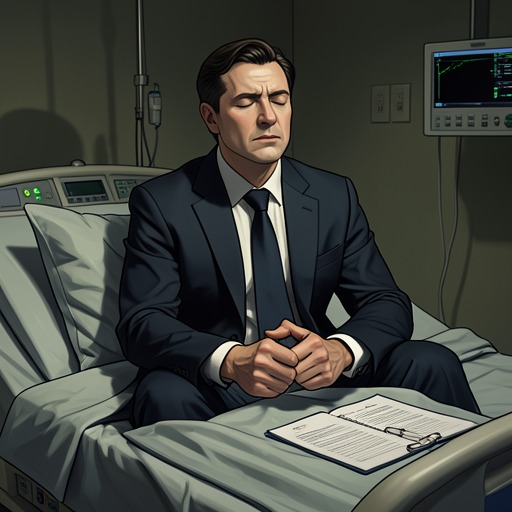
Gideon tells Michel Sommo that he contracted kidney cancer a year earlier and had undergone two operations. The growth has since spread through his abdomen. Doctors in New York saw no point in another operation, and Gideon describes his condition as miserable. His account makes clear that his illness is not a passing interruption but a narrowing horizon: he says his time has run out and recognizes that his life is approaching its end.
Before that account, Gideon sends Manfred Zakheim a telegram saying that he is going to Mount Sinai Hospital in New York for a week of radiotherapy. He asks Zakheim to find a quiet private clinic with facilities for chemotherapy, and gives him a free hand to manage his property on the condition that he stay with him. Later, writing from the family home, Gideon says he expects to remain at Hadassah Hospital rather than leave. The evidence records these plans and changes in expectation, but does not establish the outcome of the proposed treatments.
Illness and the Return Home
The illness alters Gideon’s decisions about where he belongs and what should happen to what he owns. He tells Zakheim that his estate is to be shared among his son, Ilana’s daughter, and Zakheim’s grandchildren, and asks his old friend not to leave him. He also considers returning to Israel after treatment. In a separate message, Zakheim offers to forgive Gideon, make a fresh start, and arrange a sale of the Zikhron property while allowing Boaz to remain there; the offer is explicitly tied to concern for Gideon’s health.
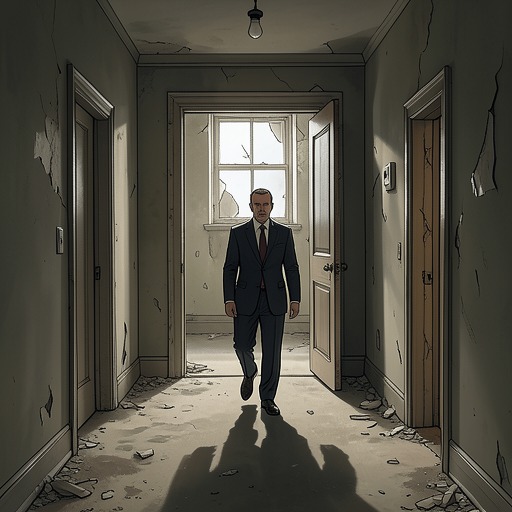
Gideon ultimately returns to Israel without warning and stays in the house where he grew up. He says that the illness has helped prompt him to reconsider earlier choices, and that he came to see Boaz and remain in his childhood home. The house, he notes, already belongs in substance to Boaz, although it is still officially registered in Gideon’s name. His return therefore joins the practical question of property to the more intimate question of who will be with him as his strength fails.
Dependence and Care
At the house, Gideon’s condition is shown through concrete limits on ordinary activity. He rests on a plank bed, uses painkilling drugs brought from America, and can sort seeds only until his strength gives out. He moves about with a walking stick Boaz made for him; Boaz also makes him sandals from strips of tire and string. These details mark a change from the self-sufficient figure who once exercised control over others to a man whose movement and comfort depend increasingly on help.
The change becomes most pronounced at night. Ilana moves into Gideon’s room to care for him because he often wakes in panic and begins mumbling orders as if continuing a nightmare. She gives him an herbal drink and pills, and stays beside him until he settles again. During the day she helps him dress and eat, shaves him, and assists him with basic needs. His care is not presented as a single dramatic rescue but as repeated work: meals, medicines, clothing, and company organized around the rhythms of an increasingly dependent life.
Relationships and Consequences
Gideon’s illness changes his relationship with Ilana without restoring their former marriage. In his letter to Michel, he stresses that Ilana chose to stay for a few days and care for him before his expected hospital admission, and that he did not ask her to remain. He describes their present relation as unlike that of a conventional married couple and offers to provide an affidavit affirming her innocence. His account responds to Michel’s jealousy while also making the limits of his own claim clear: Ilana’s care is real, but it does not amount to a return to their marriage.
His dependence also brings him closer to Boaz, who makes the walking stick and sandals that help him get around and has a role in the household where Gideon now lives. Gideon’s plans for his estate name Boaz among the beneficiaries, while his return acknowledges that the property is already Boaz’s in practical terms. Illness thus changes not only who assists Gideon, but the direction of inheritance and responsibility within the family.
Changed Perspective and Narrative Significance
Gideon connects his illness with a change in how he regards other people. He admits that he had tended to look down on them, whether because he thought stupidity widespread or because people had looked up to him since childhood. Now, he says, attentiveness and hesitation characterize his relations with those around him. He recognizes that there may be too little time left to meet Michel on more equal terms, and apologizes for the trouble his existence causes.
The illness does not erase Gideon’s history of estrangement or make reconciliation complete. Instead, it changes the scale on which relationships are lived: the old disputes over marriage and property persist, but they now coexist with treatment plans, a walking stick, and the care required through the night. His return to the childhood home makes that reversal visible. A man who once left and severed contact comes back as someone dependent on the family he had abandoned, while the approaching end of his life presses him to reconsider what he has withheld and what he can still leave behind.